
guide
Between unusual campsites tucked away in the countryside and sites listed as Grand Site de France, Ardèche packs the must-sees into a compact area, which makes it one of the most complete destinations in the south of France for an active stay.
It is the symbolic gateway to the Ardèche gorges: a natural stone arch 54 metres high and 60 metres wide, shaped by the river over more than 500,000 years. It is one of the only examples in France of this type of arch still crossed by an active river. It is also the most popular starting point for canoeing down the gorges.
A 30-kilometre canyon carved out by the river, listed as a Grand Site de France, which draws more than 1.5 million visitors between April and September. The scenic road running alongside the gorges offers around ten developed viewpoints, but the best way to discover them is still by water: by canoe or kayak, over a day or on a two-day bivouac trip.
A faithful replica of the Chauvet cave, discovered in 1994 and closed to the public to protect it, Chauvet 2 opened in April 2015 a few kilometres from the original site. It now welcomes around 350,000 visitors a year to see cave paintings 36,000 years old, among the oldest known in the world.
Practical information: allow €18 for an adult, €9 for ages 10 to 17, free for under 10s. In July and August, open from 8:30 am to 8:30 pm; in September, from 9 am to 7 pm. Allow 2.5 to 3 hours on site, and book your guided visit slot online, especially in summer, as groups are limited to 28 people. Prices and opening hours change from season to season, so check them before you go.
On the border with the Gard, this chasm listed as a Grand Site de France descends 121 metres underground via 582 steps, down to chambers among the largest in Ardèche. It is one of the most visited caves in France, and much cooler in summer than the surface.
Practical information: €16.50 for an adult, €11 for children aged 6 to 17, free under 6. Open from early February to mid-November; in July and August, reception from 9:30 am to 7 pm with regular departures, and more spaced-out slots the rest of the season. Allow half a day for the full visit (cave by reservation, Cité de la Préhistoire on a self-guided visit). Prices and opening hours change from season to season, so check them before you go.
Southern Ardèche has several hilltop villages on the riverbank, classed among Les Plus Beaux Villages de France. Balazuc, overlooking the Ardèche, keeps a true medieval charm: vaulted lanes, a 12th-century castle and a fortified Romanesque church. Vogüé, a few kilometres upstream, offers the same charm with a castle overlooking the village. Labeaume, nestled between limestone cliffs and the Baume river, is worth the detour even if it does not (yet) have the official label.
In the north of the department, this volcanic peak rising to 1,551 metres is home, at its foot, to the three sources of the Loire, France’s longest river. Listed since 1933 and part of the UNESCO Global Geopark of the Monts d’Ardèche, it is the second most visited site in the department after the gorges. The climb to the summit takes less than an hour return, for a view over the whole Ardèche plateau.
The main town of southern Ardèche is known for its 12th-century castle, listed as a historic monument since 1943 and converted in 2024, after seven years of work, into a contemporary art centre. The Saturday morning market, which brings the town centre to life from 9 am to 1 pm, is a must for tasting local Ardèche produce.
Straddling the communes of Berrias-et-Casteljau, Les Vans and Banne, this 16 km² forest spreads over a limestone plateau 150 million years old, sculpted by erosion into a true labyrinth of rocks with animal shapes, which locals call the bestiary. The site overlooks the Chassezac gorge and contains several dolmens, traces of human occupation since prehistoric times. The Sentier de la Vierge, a loop of around 1h30, lets you discover the most beautiful rocks without any hiking experience.
This is the signature activity of southern Ardèche. Several outfitters offer day descents (from the Pont d’Arc to Sauze, around 8 km) or two-day trips with a bivouac at the Gaud or Gournier campsites, the only two pitches authorised inside the gorge itself. No particular level is needed for the short routes, outside periods of high water.
The limestone cliffs lining the gorges are among the best climbing spots in south-eastern France, with routes for every level. For hiking, the gorge trail on the left bank lets you follow the river on foot without needing a canoe, with several swimming spots along the way.
Ardèche has two distinct atmospheres: in the south, around Vallon-Pont-d’Arc and Ruoms, the offer revolves around the gorges, canoeing and caves; in the north, towards the Gerbier de Jonc and the Monts d’Ardèche, nature dominates with a more mountainous character. Most visitors choose a base in the south to enjoy both the key sites (Pont d’Arc, gorges, Chauvet 2, Aven d’Orgnac) and the villages with character, all less than 30 minutes’ drive from one another.
To see the essentials, allow 3 to 4 days on site: one day for the gorges and the Pont d’Arc, a half day for the Chauvet 2 cave or the Aven d’Orgnac, one day for the villages (Balazuc, Vogüé, Labeaume) and the Paiolive forest, and a last day for Aubenas or a trip to the Gerbier de Jonc. Ardèche is easily reached by car from Lyon, Montpellier or Avignon, and the nearest railway station to the gorges is Montélimar.
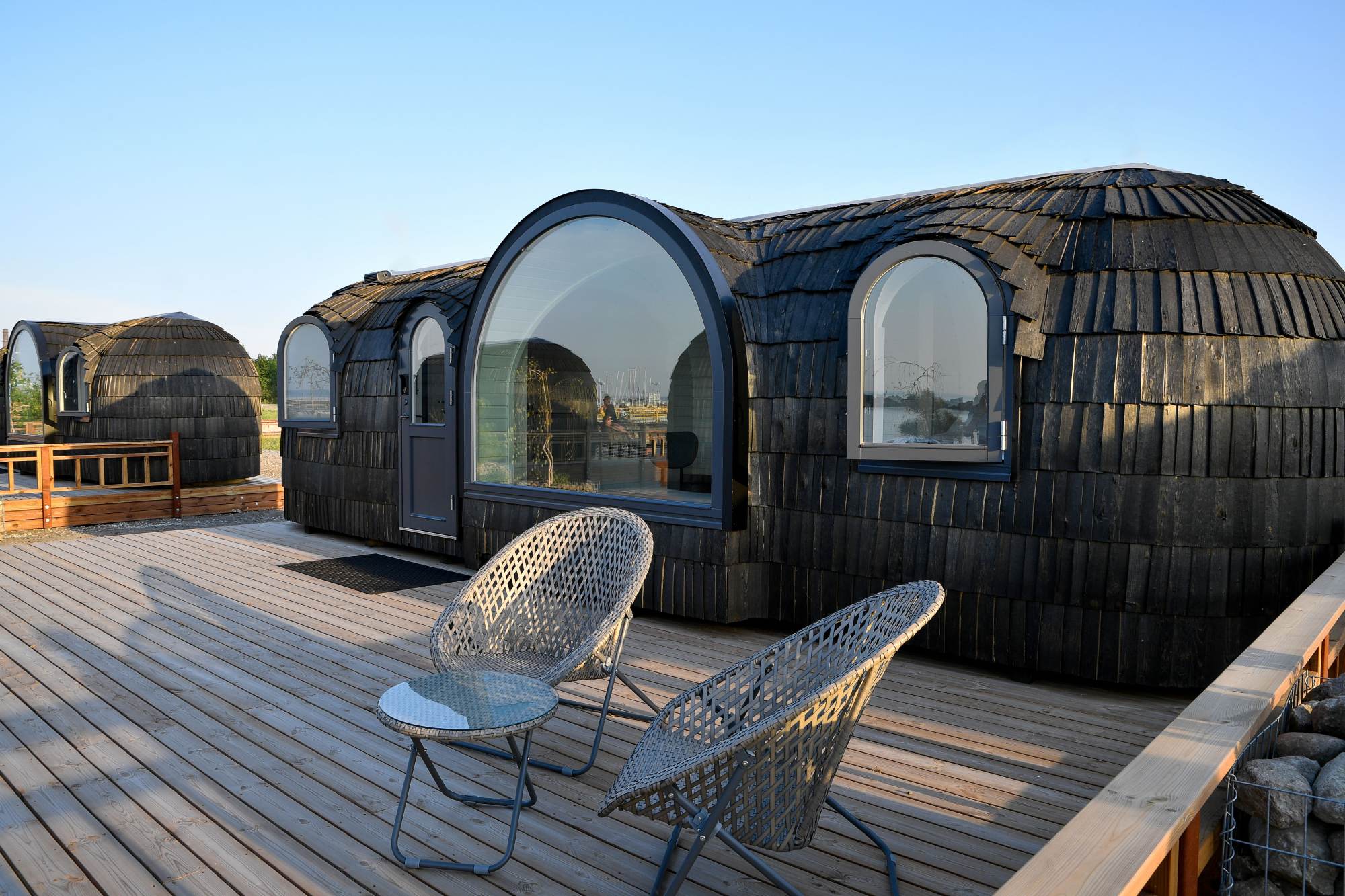
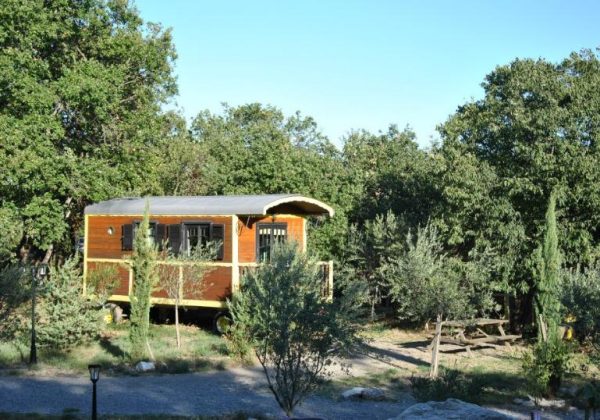
Most unusual campsites in Ardèche are concentrated around Vallon-Pont-d’Arc and Ruoms, a few minutes from the gorges. This makes it easy to combine an unusual place to stay (treehouse, bubble dome) with a canoe trip the next day. If you are still undecided about the type of accommodation, our guide to choosing your unusual accommodation goes through the options one by one.
The short route between the Pont d’Arc and Sauze (around 8 km) takes half a day. The full descent of the gorges, over two days with a bivouac, is reserved for the Gaud or Gournier campsites, the only two pitches authorised inside the gorge.
No, it is a faithful replica built a few kilometres from the original site, which has been closed to the public since its discovery in 1994 to protect the cave paintings, around 36,000 years old.
From April to September, when the site is busiest (more than 1.5 million visitors). To avoid the crowds while still enjoying good weather, May, June and September are the best windows.
Campsites marked “Partner” are Aimer Camper members and are shown first. All results match your search.