
guide
The Gard combines the Pont du Gard, a Roman aqueduct on the UNESCO World Heritage list, the Gardon gorges, ideal for canoeing, and the Renaissance heritage of Uzès. Allow 3 to 4 days to discover these two hubs from Nîmes, reachable by TGV.
A Roman aqueduct on the UNESCO World Heritage list, limestone gorges and villages with character: the Gard combines ancient heritage and Mediterranean nature around Nîmes and Uzès.
The Pont du Gard, a 2,000-year-old Roman aqueduct, stands 49 metres high and 270 metres long and remains one of the best-preserved ancient monuments in Europe. The site is open all year from 9am until nightfall; allow 8 € to 15 € for museum entry, depending on the season.
Upstream from the Pont du Gard, the Gardon gorges can be explored by canoe or on foot along trails offering fine views from above of the aqueduct and the surrounding garrigue. The biosphere reserve shelters well-preserved wildlife and plants, far from the crowds at the main site.
Uzès, a town of art and history with well-preserved Renaissance heritage, is best explored on foot around its Place aux Herbes. Nearby, villages such as Aiguèze and Montclus are among the most beautiful in the Gard, perched above the Ardèche and Cèze gorges.
Nîmes, served by a direct TGV from Paris in a little under 3 hours, is the most convenient gateway for then driving to the Pont du Gard and Uzès. Nîmes-Alès-Camargue airport adds a few low-cost connections. By car, allow about 6 hours from Paris via the A7.
For a couple over one week, allow between 450 € (camping, hikes, Gardon gorges free to access) and 950 € with museum entry at the Pont du Gard, canoe hire and regular meals in restaurants. A canoe descent under the Pont du Gard costs on average 20 to 30 € per person.
Canoeing on the Gardon remains the region’s flagship activity, with several launch points allowing you to paddle under the Pont du Gard. The Arena of Nîmes, about half an hour away, complements a visit for lovers of Roman heritage. The Provençal markets of Uzès, especially on Saturday mornings, are worth the detour for local produce and the atmosphere of the old town.
Spring and early autumn offer the best window: milder temperatures than the Mediterranean summer for walking in the gorges, and a Gardon water level still high enough for canoeing, which is not always the case in midsummer during severe low-water periods.
The department is organised around two complementary hubs: the Pont du Gard and the Gardon gorges on one side, Uzès and the Gard hinterland on the other, about twenty minutes’ drive apart. Allow 3 to 4 days to combine the two.
Visiting the Pont du Gard early in the morning or late in the day, rather than at midday in summer, changes the experience entirely: the low light on the stone is more photogenic, and the heat, which can be overwhelming on the site in full sun, is much less noticeable. A late-afternoon canoe trip also helps you avoid the largest midday groups.
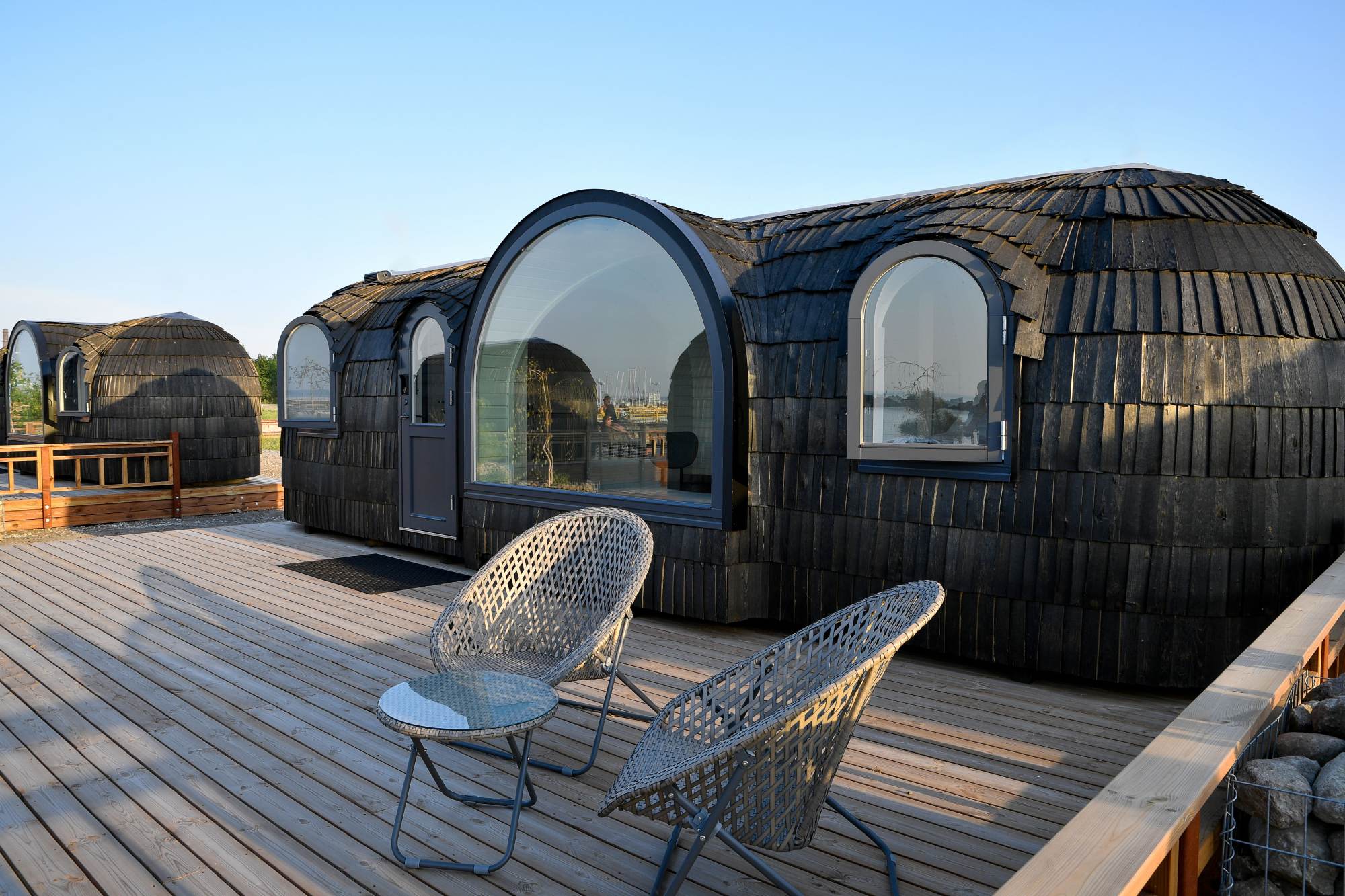
The Camping Insolite network lists 18 unusual accommodations in the Gard, with an average rating of 4.5/5 from more than 12,300 verified reviews. The safari tent lodge remains the most represented type (7 properties), ahead of the treehouse and the coco-sweet (4 each).
On Camping Insolite, unusual accommodations in the Gard make the most of the garrigue landscape for quiet nights, a few minutes from the tourist sites. A treehouse suits a stay in the middle of nature, while a wooden caravan offers more space for a family stay. To compare the different options before booking, our guide to treehouses, bubbles and safari tents details the advantages of each accommodation, and our budget guide for an unusual camping stay helps you prepare your trip.
Allow 3 to 4 days to combine the Pont du Gard, the Gardon gorges and Uzès.
For a couple, allow between 450 € (camping, hikes) and 950 € with museum entry, canoeing and regular restaurant meals.
Access to the site is paid (parking and museum), between 8 € and 15 € depending on the season. The exact rate should be checked before you go.
The Gardon water level drops sharply in summer during low-water episodes. Spring and autumn generally offer better conditions.
Nîmes, served by a direct TGV from Paris, remains the most convenient access point before continuing by car.
Spring and early autumn offer milder temperatures than the Mediterranean summer and a better water level for canoeing.
Campsites marked “Partner” are Aimer Camper members and are shown first. All results match your search.